Flecha Anterior Criptomonedas

Ethereum ($ETH) Pronóstico de Cripto: Baja 5.6% Hoy

Morpher AI identificó una señal bajista. El precio de cripto podría seguir cayendo basado en el impulso de las noticias negativas.

¿Por qué Ethereum está bajando?

ETH cripto ha bajado un 5.6% el Jun 23, 2026 15:41

Gráfico de precios ETH

Análisis Técnico de ETH

ETH Noticias

Ethereum Foundation Cuts 20% of Workforce in 'Leaner' Reorganization

The non-profit is cutting 54 jobs as it reorganizes into focused "clusters," following a succession of leadership departures.

https://decrypt.co/371864/ethereum-foundation-cuts-20-of-workforce-in-leaner-reorganization

0 News Article Image Ethereum Foundation Cuts 20% of Workforce in 'Leaner' Reorganization

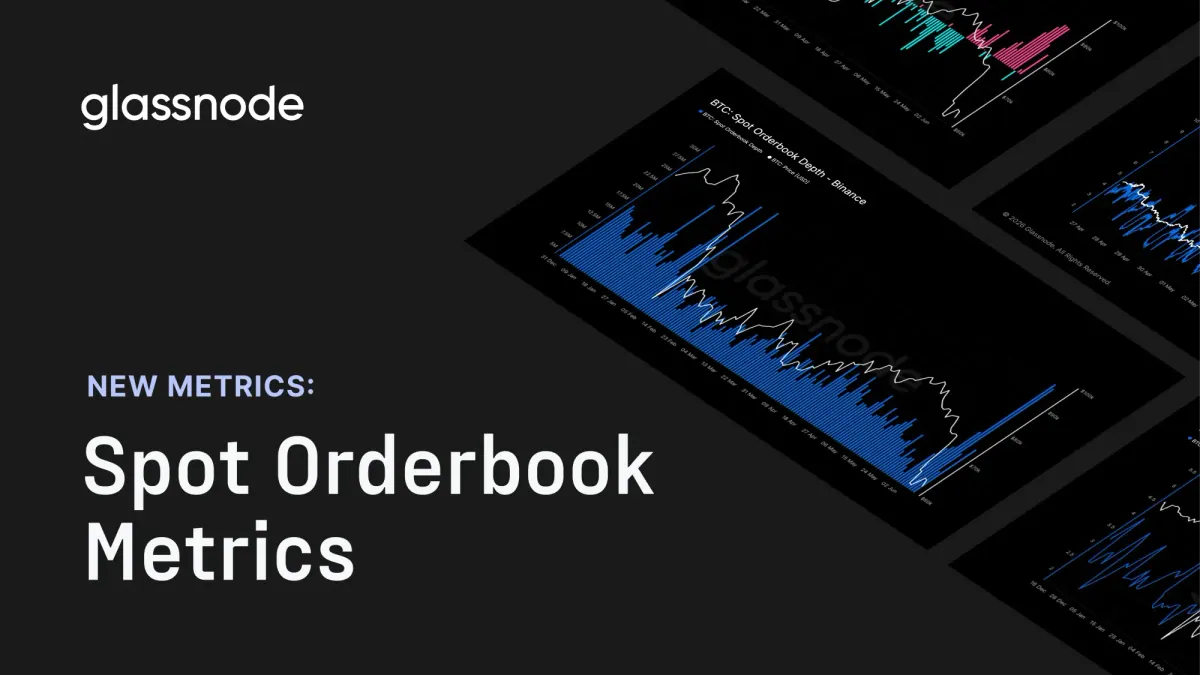
Spot Orderbook Metrics Live on Glassnode

The release gives Glassnode users a cleaner view of liquidity, execution conditions, and resting market intent before trades clear.Executed trades show where transactions happened. The order book gives the live view around those trades: available liquidity, quoted prices, and the cost of crossing the market at a given point in time.For traders, execution desks, quant researchers, and risk managers, this matters because volume alone can hide weak liquidity. A venue can print high volume while the spread widens, depth thins, or larger orders become expensive to execute. Orderbook metrics make those conditions measurable. Explore the new metrics in Glassnode Studio. Available to Professional plan users. Visit metrics Why Orderbook Metrics Matter Executed volume shows where transactions happened. Orderbook data shows where liquidity is sitting right now, waiting to be hit.That distinction matters because a market can look busy on trade volume while staying fragile underneath. A venue might print high volume, but if the spread widens or depth disappears, getting filled becomes expensive. A price move might look strong, but with little resting liquidity behind it, the move is unstable.These metrics help answer practical trading questions: Where is liquidity best right now? Which venue has the tightest spread and the deepest book? How expensive is it to execute? What's the estimated price impact for a $10k, $100k, $1m, or larger order? Is liquidity improving or deteriorating? Are spreads widening, depth thinning, or liquidity drifting away from mid? Is there more resting buy or sell liquidity around the market? Is the bid side or the ask side deeper within a chosen price band? Is the market turning fragile? Are small trades still cheap while larger ones would walk straight into worse prices? Reading Intent Before the Trade Prints Orderbook data tracks intent. Trades are confirmed actions: aggressive buyers or sellers crossing the spread. The book shows resting limit orders, the liquidity participants are currently willing to provide.This creates a pre-trade view of the market: bid-side depth measures resting buy liquidity below the market; ask-side depth measures resting sell liquidity above the market; spread measures the immediate cost of crossing the market; price impact estimates the execution cost for a given trade size; depth slope shows whether liquidity is concentrated near the mid-price or placed further away. This is useful in live trading because liquidity often deteriorates before volatility appears in executed trades. Spreads widen, orders get pulled, and depth becomes uneven. These changes can be measured directly from the book. New Metrics Overview Bid/Ask Spread: TWA, Max, Min, Close The bid/ask spread is the gap between the best ask and best bid, expressed in basis points of the mid-price. It is the cleanest measure of top-of-book trading friction.spread_bps = (best_ask − best_bid) / mid_price × 10,000 Spread (TWA): time-weighted average spread over the bucket — the "normal" trading friction during the interval. Lower values indicate tighter top-of-book liquidity; higher values suggest thinner markets or liquidity stress. Spread (Max): the widest spread observed at any single moment in the bucket. Did this venue briefly become expensive or unreliable to trade on? Spikes flag momentary liquidity gaps from news shocks, flash moves, or pulled orders. Spread (Min): the tightest spread in the bucket — the best-case cost of crossing during the interval. Spread (Close): the spread at the final update of the bucket — a snapshot of conditions as the interval closes, useful for aligning with bar-close-based models. View live metric Depth Total resting liquidity on one side of the book, bid (buy limit orders below the market) or ask (sell limit orders above it), within a chosen price band around mid, measured in quote currency and time-weighted across the bucket.The band is configurable across 25, 50, 100, 200, 500, 1000, 1500, and 2000 bps, so you can measure liquidity right at the top of book or progressively deeper. Because the side is selectable, you can track bid and ask liquidity independently, which is handy for catching one-sided book building that a netted measure would hide.Depth is the core liquidity read. More depth means the market absorbs larger trades with less price movement. Thinning depth usually comes before wider spreads and higher price impact. View live metric Depth Imbalance Depth imbalance compares bid-side depth with ask-side depth inside the selected band.imbalance = (bid_depth - ask_depth) / (bid_depth + ask_depth)The range is [-1, +1].Positive values mean there is more resting buy liquidity below the market. Negative values mean there is more resting sell liquidity above the market.This is one of the most useful orderbook features for short-horizon models. It captures how liquidity is distributed around the current price and can be used to study short-term pressure, mean reversion, or momentum depending on the horizon. View live metric Depth Delta Depth delta is the simple difference between bid depth and ask depth.depth_delta = bid_depth - ask_depthDepth imbalance normalizes the difference. Depth delta keeps the absolute size.This matters when the magnitude of liquidity matters more than the ratio. For example, a small imbalance in a very deep book can be more relevant than a large imbalance in a thin book. Depth Slope Depth slope measures how liquidity builds as price moves away from the mid-price.depth_slope = depth_wide_band / depth_25bpsThe wider band can be 100, 500, 1000, or 2000 bps.A higher slope means liquidity is thin near the mid-price and thicker further away. This can signal fragile top-of-book liquidity: small orders may still execute cheaply, while larger orders quickly move into worse price levels.A lower slope means more liquidity is available close to the mid-price, which usually supports better execution for moderate order sizes. View live metric Price Impact (Estimated Slippage) Answers the most practical pre-trade question there is: if I send a market order of size X right now, what will it cost me?For a given notional (e.g. $10k, $100k, $1M, $10M in quote currency), we walk the live order book from mid-price, compute the volume-weighted average fill price, and express the gap to mid in basis points:impact_bps = (vwap_fill_price − mid_price) / mid_price × 10,000Example reading: "Buying $1Mio of BTC on Binance right now costs ~3 bps." Use it to estimate cost before trading, compare venues for a given order size, or benchmark realized fills against expectation. View live metric Putting it Together: a Practical Example Suppose BTC sells off sharply during a short time window. A trades-only view shows heavy sell volume after the move has started. The order book gives more detail about the liquidity conditions around the move. Spread (Max) spikes on Venue A but stays contained on Venue B → Venue B is the safer exit. Depth within 100 bps halves on Venue A → its book is being pulled, not just consumed. Depth Imbalance flips deeply negative → resting sell pressure is stacking above the market. Price Impact ($1M) triples → the real cost of de-risking has changed, regardless of what the last trade printed at. Each of these signals was visible in the book before it showed up in executed prices. How Useful is Orderbook Data for Your Team? Pre-trade venue selection – "Where do I execute?" Which exchange offers the best liquidity, on average and at the moment of execution? Compare spreads and estimated execution cost across exchanges for the same pair, at the same time. Metrics: Spread (TWA), Spread (Max), Price Impact Short-horizon directional alpha – "Which way does price go next?" Quant / ML users building features for models that predict mid-price returns over the next N minutes. Depth imbalance and depth delta capture the resting-order pressure on each side of the book — a classic microstructure input whose predictive sign can flip between momentum and contrarian depending on the measurement horizon. Metrics: Depth Imbalance, Depth Delta, Depth Risk management – "Can I exit if I need to?" Which venue holds up under stress — and which one evaporates? Track how depth, spread, and price impact deteriorate during volatility events to know in advance where an emergency exit is cheapest. Metrics: Price Impact, Depth, Spread (Max) Market structure or regime detection – "What kind of market is this?" For users building macro overlays or regime-switching models on top of microstructure. Persistent widening of spreads, thinning depth, or steepening depth slopes signal a transition from a calm, liquid regime to a fragile one — often before realized volatility confirms it. Metrics: Spread (TWA), Depth, Depth Slope Available Glassnode Orderbook Metrics Spot Orderbook Metrics are live now for Binance and Coinbase, covering the most liquid BTC and ETH pairs at 10-minute, 1-hour, and 24-hour resolutions in CSV and JSON and via the API. Configurable parameters: depth band (25 / 50 / 100 / 200 / 500 / 1000 / 1500 / 2000 bps) side (bid / ask) for depth-based metrics, and order notional for price impact. Leverage the full power of Glassnode's platform with the fully customizable Professional plan. Compare pricing Follow us on X for timely market updates and analysis Join our Telegram channel For on-chain metrics, dashboards, and alerts, visit Glassnode Studio

https://research.glassnode.com/spot-orderbook-metrics/

1 News Article Image Spot Orderbook Metrics Live on Glassnode

Morning Minute: Fomo's $75M Raise Shows Big VCs Are Still Betting on Consumer Crypto

Crypto majors are selling off as big Tech gets routed. Saylor is hoarding cash. and ETH heavyweights team up to fund R&D with ETHLabs.

https://decrypt.co/371851/morning-minute-fomos-75m-raise-shows-big-vcs-are-still-betting-on-consumer-crypto

2 News Article Image Morning Minute: Fomo's $75M Raise Shows Big VCs Are Still Betting on Consumer Crypto

Ethlabs Launches to Scale Ethereum for Institutions

Sharplink says the new nonprofit, Ethlabs, "exists to ensure the network is ready to absorb" the demand that institutions will place on it with stablecoins, tokenization and AI.

https://cointelegraph.com/news/bitmine-sharplink-and-joe-lubin-back-ethereum-rd-nonprofit

3 News Article Image Ethlabs Launches to Scale Ethereum for Institutions

BitMine, Sharplink, Joe Lubin Back New Ethereum Research and Development Lab

Some of Ethereum's largest holders are coming together to fund a new research and development lab aimed at boosting the network and ETH.

https://decrypt.co/371811/bitmine-sharplink-joe-lubin-ethereum-research-lab-ethlabs

4 News Article Image BitMine, Sharplink, Joe Lubin Back New Ethereum Research and Development Lab

Historial de precios Ethereum

23.05.2026 - ETH Cripto bajó 5.2%

23.05.2026 - ETH Cripto bajó 6.0%

08.05.2026 - ETH Cripto subió 5.0%

  • El movimiento alcista en ETH hoy se puede atribuir a una adquisición significativa de 126,971 ETH por parte de BitMine, lo que indica un fuerte interés institucional en la criptomoneda.
  • El rescate de docenas de Ethereum NFTs por parte del creador de Bored Ape Yacht Club, Yuga Labs, también podría haber contribuido al sentimiento positivo en torno a ETH, mostrando los esfuerzos de la comunidad para proteger y apoyar el ecosistema de Ethereum.
  • A pesar de la reciente caída de precios por debajo de los $1,600 y las preocupaciones sobre una posible caída adicional a $1.4K, parece que el mercado ha respondido positivamente a las inversiones institucionales e iniciativas comunitarias, lo que ha llevado al movimiento alcista en ETH hoy.

23.05.2026 - ETH Cripto bajó 5.6%

15.05.2026 - ETH Cripto subió 10.1%

  • Se informó un aumento significativo en las tenencias de Ethereum por parte de BitMine Immersion Technologies, con la empresa ahora poseyendo más de 5.6 millones de ETH valorados en más de $10 mil millones.
  • El presidente Tom Lee mencionó que la empresa está comprando ETH de manera agresiva debido a la percepción de desconexión entre la actual corrección de precios y los sólidos fundamentos de Ethereum.
  • Es probable que las compras sustanciales de ETH de BitMine hayan contribuido al movimiento alcista en el mercado de ETH hoy.
  • Las preocupaciones sobre una posible caída más pronunciada en Ethereum debido a que los inversores estadounidenses se están desplazando hacia el mercado de valores podrían haber creado cierta incertidumbre, pero la actividad de compra de BitMine eclipsó estas preocupaciones, lo que llevó a la tendencia alcista.

15.05.2026 - ETH Cripto subió 5.2%

  • A pesar de las preocupaciones sobre una posible liquidación debido al cambio de enfoque de los inversores estadounidenses hacia el mercado de valores, Ethereum experimentó un fuerte movimiento alcista hoy.
  • La noticia de Japón recortando impuestos sobre Bitcoin y Ethereum podría haber impactado positivamente el sentimiento de los inversores hacia Ethereum, lo que llevó a un aumento en la demanda y un repunte en el precio.
  • Además, la propuesta de cuentas cuánticas a prueba en Ethereum por parte de investigadores podría haber generado optimismo entre los inversores sobre la seguridad de la red y su escalabilidad futura.
  • La combinación de noticias regulatorias positivas, avances tecnológicos y acumulación corporativa podría haber superado las preocupaciones sobre posibles liquidaciones, impulsando el movimiento alcista de Ethereum hoy.

15.05.2026 - ETH Cripto subió 9.2%

  • Se cree que una significativa acumulación de Ethereum, valorada en más de $10 mil millones, ha contribuido al movimiento alcista, señalando un fuerte interés institucional.
  • Se piensa que las declaraciones del Presidente Tom Lee sobre el ritmo continuo de compras, impulsadas por la percepción de subvaloración de ETH, han aumentado la confianza de los inversores y alimentado la tendencia alcista.
  • Un incidente que involucra a Aztec Connect siendo explotado por $2.1 millones puede haber resaltado la importancia de la seguridad en el sector de las criptomonedas, potencialmente atrayendo a más inversores a tokens establecidos como Ethereum.
  • Las preocupaciones sobre una mayor liquidación en Ethereum debido al cambio de inversores estadounidenses hacia el mercado de valores podrían haber causado inicialmente incertidumbre, pero es probable que los desarrollos positivos hayan eclipsado estas preocupaciones.

15.05.2026 - ETH Cripto subió 5.9%

  • Hoy, ETH experimentó un aumento de más del 10% en su valor, lo que sugiere una posible recuperación a corto plazo después de un período de declive.
  • Un importante participante del mercado, BitMine, ha estado acumulando constantemente sus tenencias de ETH, alcanzando casi el 5% del suministro total a pesar de la tendencia a la baja del mercado.
  • Es probable que el mercado haya sido influenciado por informes sobre la acumulación continua de ETH por parte de BitMine y la posible participación de una billetera asociada con un individuo conocido como Arthur Hayes en la adquisición de ETH.
  • El crecimiento de los volúmenes de transacciones y swaps en la plataforma Exodus también apunta a un aumento en el interés y la actividad dentro del sector de las criptomonedas, lo que contribuye al sentimiento positivo del mercado en torno a ETH.

05.05.2026 - ETH Cripto bajó 11.1%

  • El precio de ETH cayó por debajo de $1,600, alcanzando un mínimo de 13 meses, en medio de una venta generalizada en el mercado desencadenada por la caída de Bitcoin por debajo de los $60,000.
  • La vulnerabilidad en Zcash y la disminución de Bitcoin contribuyeron al sentimiento negativo en torno a ETH, lo que llevó a una mayor presión de venta.
  • Una oferta de acciones preferentes con un dividendo del 9.5% no proporcionó suficiente apoyo para contrarrestar el sentimiento bajista del mercado.
  • El sentimiento general en el mercado de criptomonedas, como lo indican Bitcoin, Ethereum y Solana alcanzando mínimos a niveles de COVID, sugiere que los inversores están cautelosos, lo que potencialmente podría llevar a una mayor caída para ETH a corto plazo.

07.05.2026 - ETH Cripto subió 5.3%

  • El precio de ETH se disparó a pesar del sentimiento bajista general en el mercado de criptomonedas.
  • Una pérdida significativa no realizada en sus tenencias de Ethereum no detuvo el impulso alcista de ETH para BitMine.
  • La vulnerabilidad en Zcash y la venta de Bitcoin probablemente contribuyeron a la incertidumbre general del mercado, pero ETH logró desafiar la tendencia.
  • A pesar de la caída significativa de XRP y del sentimiento negativo en general en el mercado, la resistencia de ETH sugiere una fuerte confianza de los inversores en su potencial a largo plazo.

18.05.2026 - ETH Cripto bajó 5.2%

  • La toma de beneficios por parte de los inversores después de un reciente aumento de precios puede haber contribuido al movimiento bajista en ETH hoy.
  • La aplicación por parte de Grayscale de modelos de valoración tradicionales al activo DeFi AAVE podría haber desviado temporalmente la atención de los inversores de ETH.
  • El lanzamiento de la plataforma de opciones binarias de SeerDEX en Solana podría haber atraído a algunos operadores lejos de Ethereum, impactando negativamente en su precio.
  • La posición vaga de Elon Musk sobre la propiedad de Bitcoin y Dogecoin puede haber aumentado la incertidumbre en el mercado, lo que llevó a una venta masiva en ETH.

18.05.2026 - ETH Cripto bajó 5.3%

  • El movimiento bajista en ETH hoy se puede atribuir a:
  • Los operadores del mercado de predicción cada vez más bajistas en Bitcoin y Ethereum, indicando una falta de confianza en objetivos de precios más altos.
  • El Market Compass muestra una puntuación compuesta de 14 sobre 100, señalando un entorno de aversión al riesgo en el mercado, con factores macroeconómicos como la fortaleza del dólar estadounidense impactando en el sentimiento general.
  • La lente del comportamiento del inversor muestra una acumulación de monedas en manos más fuertes, indicando un cambio hacia la retención a largo plazo en lugar del trading activo.
  • La lente de derivados indica un libro equilibrado y bien cubierto, con financiación negativa y volatilidad comprimida, potencialmente llevando a un apretón en el mercado.
  • En general, el movimiento bajista en ETH hoy parece ser resultado de una combinación de sentimiento de mercado, factores macroeconómicos y comportamiento del inversor, creando un entorno cauteloso para los operadores.
i
Descargo de responsabilidad
Morpher no se hace responsable del contenido de las ideas de inversión de IA. Como la mayoría de las herramientas impulsadas por GPT, estos resúmenes pueden contener alucinaciones de IA e información inexacta. Morpher no le está presentando ningún consejo de inversión. Todas las inversiones conllevan riesgos y el rendimiento pasado de un valor, industria, sector, mercado o producto financiero no garantiza resultados o rendimientos futuros. Los inversores son totalmente responsables de cualquier decisión de inversión que tomen. Tales decisiones deben basarse únicamente en una evaluación de sus circunstancias financieras, objetivos de inversión, tolerancia al riesgo y necesidades de liquidez. Estos resúmenes no constituyen asesoramiento de inversión.